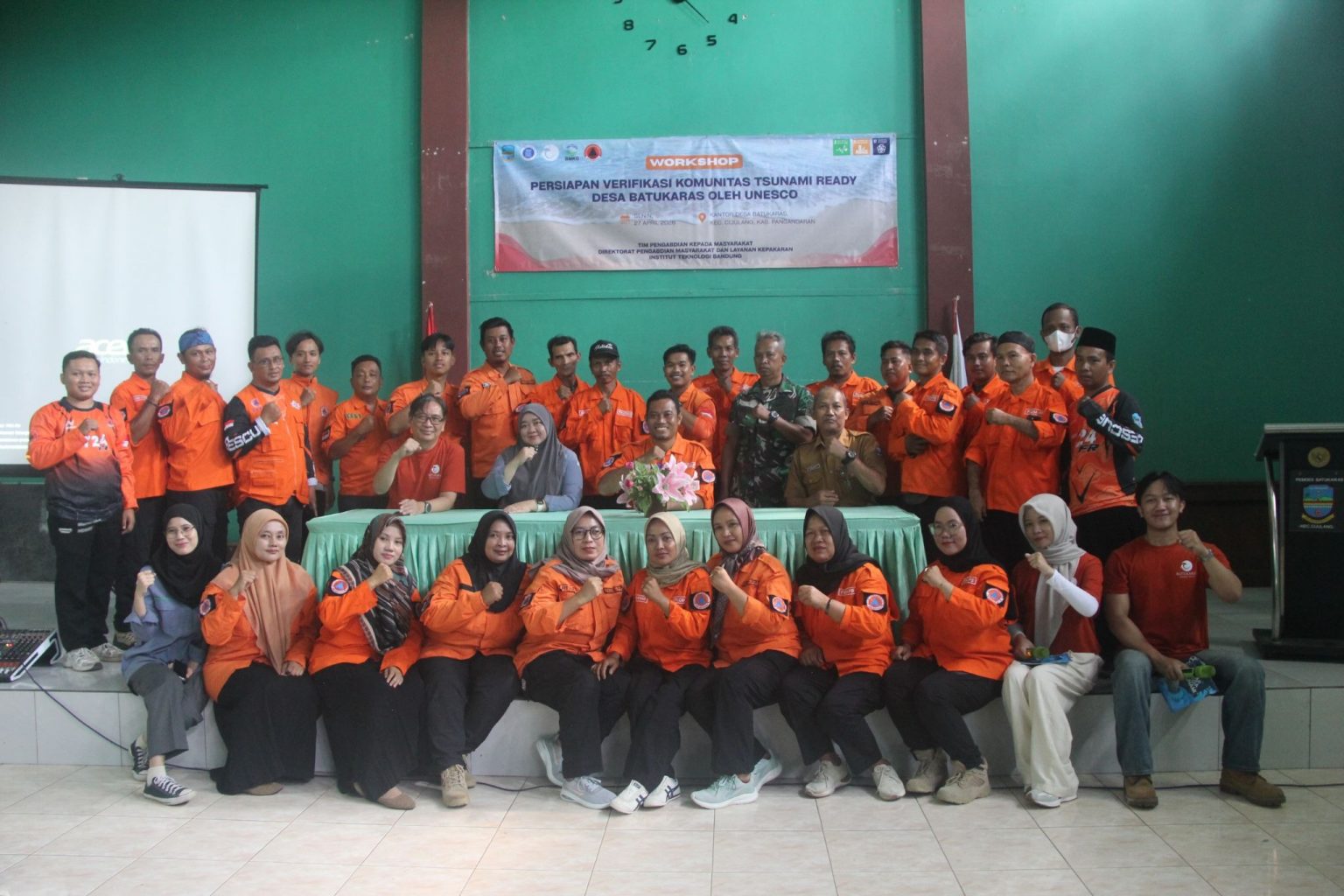
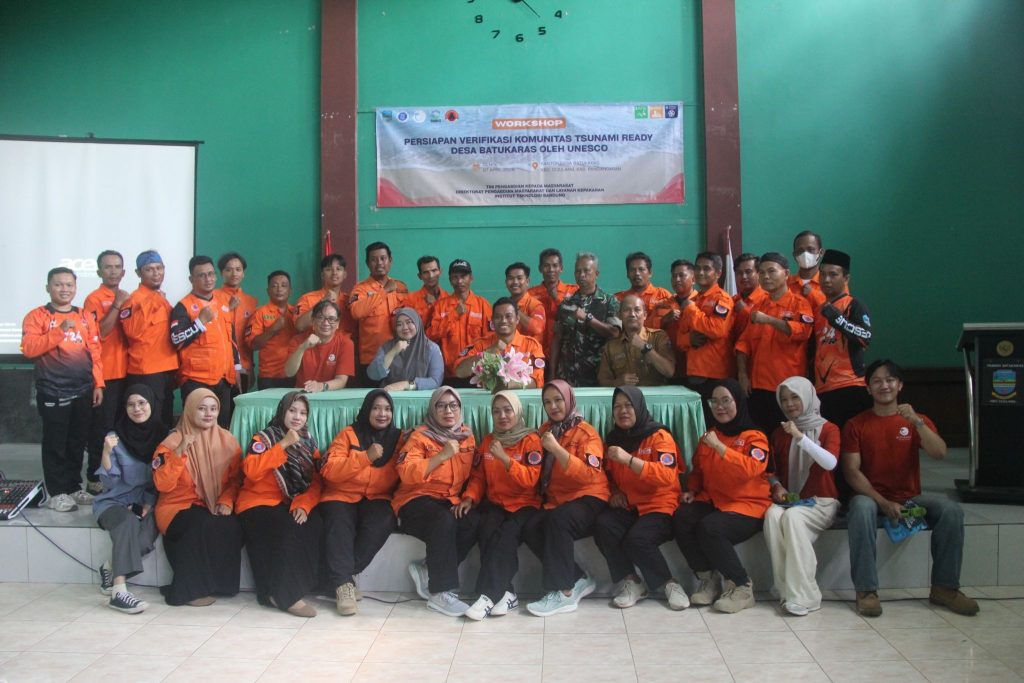
BATUKARAS, Indonesia – Coastal communities across Indonesia continue to face significant tsunami risks, particularly along the southern coast of Java. In response to this challenge, a community engagement team from Institut Teknologi Bandung (ITB), led by Dr. rer. nat. Wiwin Windupranata, S.T., M.Sc., worked alongside the Batukaras Community-Based Early Warning Forum and local stakeholders to strengthen the village’s tsunami preparedness.
The collaboration supported Batukaras in fulfilling the requirements of the UNESCO-IOC Tsunami Ready Recognition Programme, an international initiative designed to strengthen community capacity in tsunami risk assessment, preparedness, warning communication and emergency response.
In April 2026, Batukaras held a workshop to work towards international recognition as a Tsunami Ready community, marking an important step in building greater resilience against coastal hazards.
A key component of the programme involved understanding where tsunami risks may occur and who could potentially be affected. The ITB team supported the use of spatial information and tsunami inundation data to identify hazard zones and assess potential exposure within the village.
The assessment considered not only permanent residents but also tourists and tourism workers. As a popular coastal destination, Batukaras experiences changing population conditions that need to be considered when developing evacuation strategies and emergency preparedness measures.
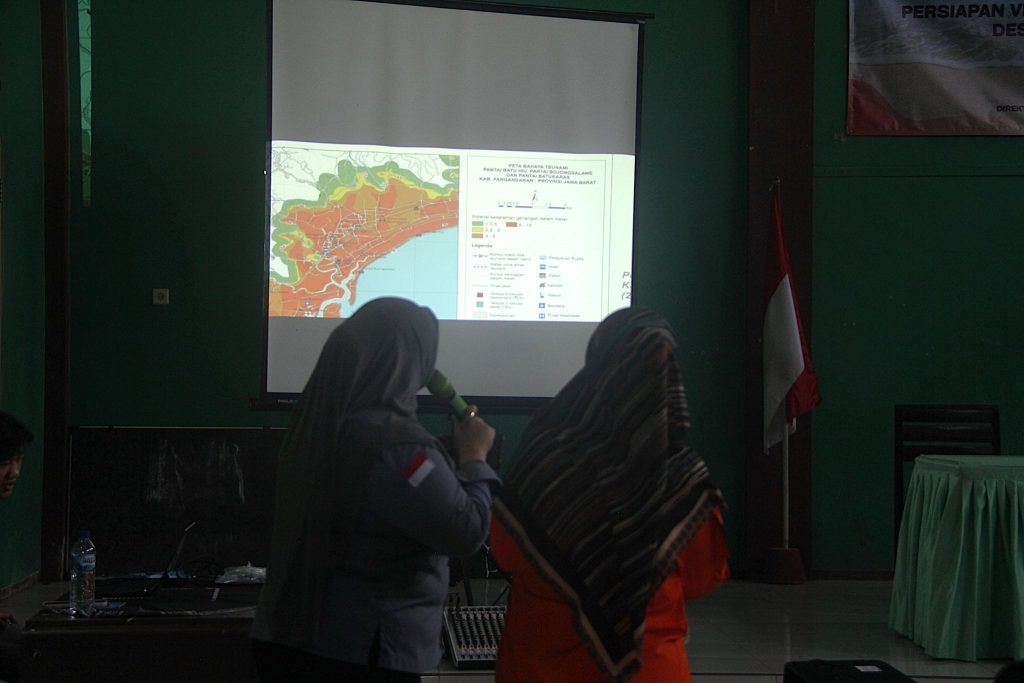
The availability of accurate and accessible spatial information is essential during a tsunami emergency. As part of the preparedness process, evacuation maps were reviewed and updated based on the locations of temporary and final evacuation sites.
These maps were made available in both physical and digital formats, helping provide evacuation guidance for residents as well as visitors who may be unfamiliar with local roads, evacuation routes and safe locations.
Beyond hazard mapping and evacuation planning, the programme also involved strengthening other aspects of community preparedness. These included the development of educational materials, community awareness activities, emergency procedures and tsunami warning dissemination mechanisms.
The preparedness system was designed to ensure that tsunami information can be translated into timely and coordinated action. This includes not only receiving official warning information, but also ensuring that communication channels are able to reach the wider community effectively.
Regular exercises and simulations remain an important part of this process. Preparedness measures, communication systems and emergency procedures need to be tested to ensure that they can function when needed.
On 27 April 2026, Batukaras underwent document and field verification conducted by the Tsunami Ready Team. The assessment reviewed various components of the village’s preparedness, including evacuation routes, public information, signage, facilities and communication systems.
The verification process also provided an opportunity to identify areas that required further improvement. Rather than representing the end of the programme, the evaluation became part of a broader process of continuously strengthening the community’s preparedness capacity.
Following the completion of the required indicators and verification process, Batukaras received recognition from the UNESCO Intergovernmental Oceanographic Commission (UNESCO-IOC) as a Tsunami Ready community.
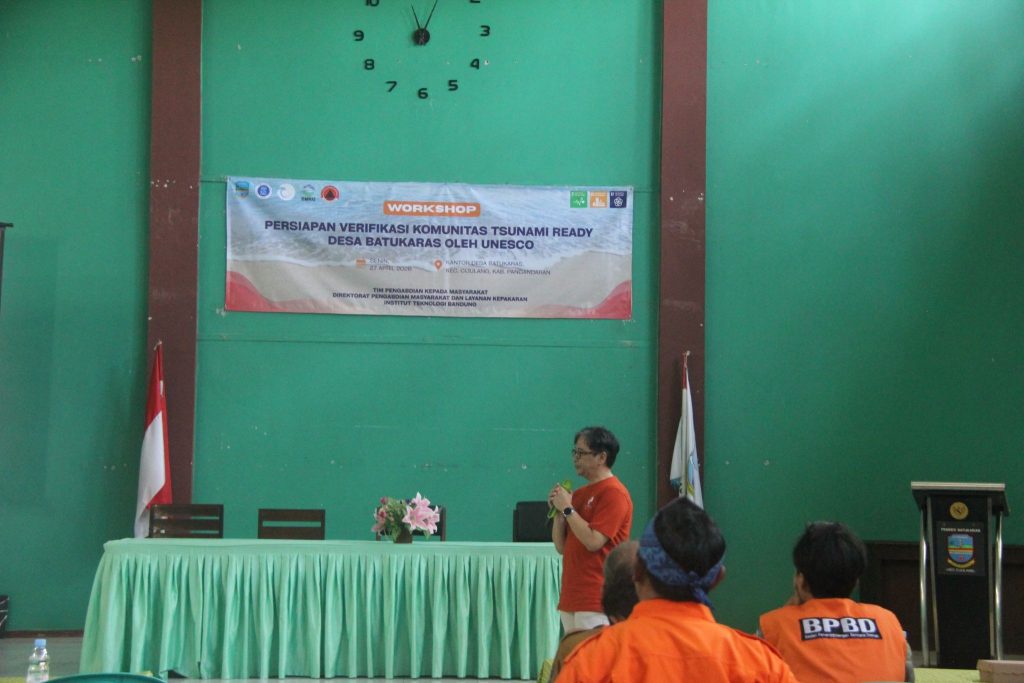
For ITB, the Batukaras programme demonstrates how scientific and spatial knowledge can contribute directly to disaster risk reduction. Information on coastal hazards, terrain, infrastructure and population exposure can be transformed into practical tools that support evacuation planning and community preparedness.
The collaboration also highlights the importance of connecting scientific expertise with local knowledge and community participation. Achieving Tsunami Ready recognition is an important milestone, but the long-term value of the programme lies in maintaining the systems, knowledge and capacity that have been developed.
As emphasized by Dr. Wiwin Windupranata, the objective extends beyond obtaining international recognition. Preparedness measures must continue to be implemented and maintained so that they can contribute to reducing potential casualties, economic losses and other impacts when a tsunami occurs.
Through collaboration between ITB, local institutions and the Batukaras community, the programme demonstrates how coastal science and community action can work together to strengthen resilience.